
Coffee, Cortisol, and Your Stress Response
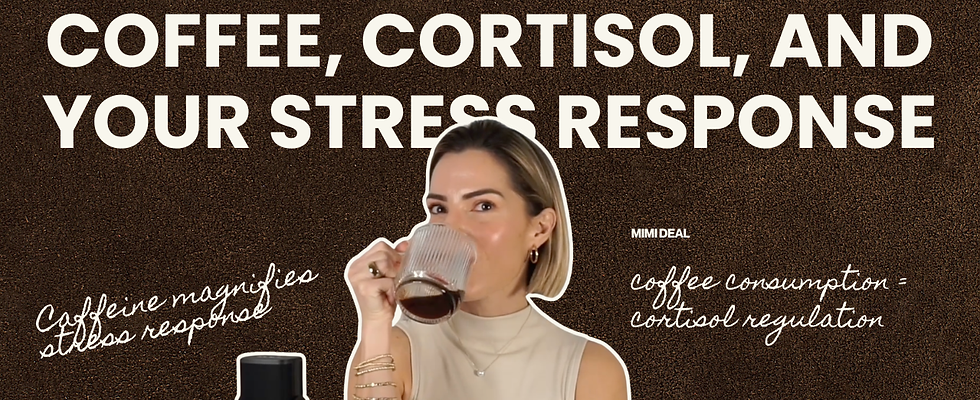
In this episode, I explore the relationship between coffee consumption and cortisol levels, addressing common concerns about drinking coffee on an empty stomach. The discussion delves into the science of cortisol, its role in the body, and how coffee affects cortisol levels. Various studies are reviewed to understand the impact of caffeine on cortisol, and the importance of genetics in coffee metabolism is highlighted.
Follow us
Medical Providers Join my Clinician Education Platform
References
Amirova M, Dadashova A, Huseynova E, et al. (2022). Black tea and coffee impact on steroid hormones status in young men. The Ukrainian Biochemical Journal. https://doi.org/10.15407/ubj94.04.083
Boonen E, Bornstein SR, Van den Berghe G. (2015). New insights into the controversy of adrenal function during critical illness. The Lancet Diabetes & Endocrinology, 3(10), 805–815. https://doi.org/10.1016/S2213-8587(15)00224-7
Cole EL, Grillo AR, Vrshek-Schallhorn S. (2024). Habitual caffeine use is associated with heightened cortisol reactivity to lab-based stress in two samples. Psychosomatic Medicine, 86(8), 730–737. https://doi.org/10.1097/PSY.0000000000001334
Cooper MS, Stewart PM. (2003). Corticosteroid insufficiency in acutely ill patients. The New England Journal of Medicine, 348(8), 727–734. https://doi.org/10.1056/NEJMra020529
Cornelis MC, El-Sohemy A, Kabagambe EK, Campos H. (2006). Coffee, CYP1A2 genotype, and risk of myocardial infarction. JAMA, 295(10), 1135–1141. https://doi.org/10.1001/jama.295.10.1135
Gavrieli A, Yannakoulia M, Fragopoulou E, et al. (2011). Caffeinated coffee does not acutely affect energy intake, appetite, or inflammation but prevents serum cortisol concentrations from falling in healthy men. The Journal of Nutrition, 141(4), 703–707. https://doi.org/10.3945/jn.110.137323
Klein LC, Whetzel CA, Bennett JM, et al. (2014). Caffeine administration does not alter salivary α-amylase activity in young male daily caffeine consumers. BMC Research Notes, 7, 30. https://doi.org/10.1186/1756-0500-7-30
Lovallo WR, Al’Absi M, Blick K, Whitsett TL, Wilson MF. (1996). Stress-like adrenocorticotropin responses to caffeine in young healthy men. Pharmacology, Biochemistry, and Behavior, 55(3), 365–369. https://doi.org/10.1016/S0091-3057(96)00105-0
Lovallo WR, Whitsett TL, Al’Absi M, et al. (2005). Caffeine stimulation of cortisol secretion across the waking hours in relation to caffeine intake levels. Psychosomatic Medicine, 67(5), 734–739. https://doi.org/10.1097/01.psy.0000181270.20036.06
Miller BS, Auchus RJ. (2020). Evaluation and treatment of patients with hypercortisolism: A review. JAMA Surgery, 155(12), 1152–1159. https://doi.org/10.1001/jamasurg.2020.3280
O’Keefe JH, Bhatti SK, Patil HR, DiNicolantonio JJ, Lucan SC, Lavie CJ. (2013). Effects of habitual coffee consumption on cardiometabolic disease, cardiovascular health, and all-cause mortality. Journal of the American College of Cardiology, 62(12), 1043–1051. https://doi.org/10.1016/j.jacc.2013.06.035
Papadimitriou A, Priftis KN. (2009). Regulation of the hypothalamic-pituitary-adrenal axis. Neuroimmunomodulation, 16(5), 265–271. https://doi.org/10.1159/000216184
Papakonstantinou E, Kechribari I, Sotirakoglou K, et al. (2016). Acute effects of coffee consumption on self-reported gastrointestinal symptoms, blood pressure and stress indices in healthy individuals. Nutrition Journal, 15, 26. https://doi.org/10.1186/s12937-016-0146-0
Ping J, Lei YY, Liu L, et al. (2012). Inheritable stimulatory effects of caffeine on steroidogenic acute regulatory protein expression and cortisol production in human adrenocortical cells. Chemico-Biological Interactions, 195(1), 68–75. https://doi.org/10.1016/j.cbi.2011.11.001
Russell G, Lightman S. (2019). The human stress response. Nature Reviews Endocrinology, 15(9), 525–534. https://doi.org/10.1038/s41574-019-0228-0
Vaidya A, Findling J, Bancos I. (2025). Adrenal insufficiency in adults. JAMA, 334(8), 714–725. https://doi.org/10.1001/jama.2025.5485
Cortisol Test. U.S. National Library of Medicine (MedlinePlus).
https://medlineplus.gov/lab-tests/cortisol-test/
CYP11B1 Gene. U.S. National Library of Medicine (MedlinePlus).
https://medlineplus.gov/genetics/gene/cyp11b1/
Chapters
00:00 Intro
00:45 Understanding Cortisol
02:17 Cortisol Patterns and Importance
04:08 Cortisol Imbalance: Too Much or Too Little
06:37 Short-term vs Long-term Cortisol Effects
08:38 Coffee and Cortisol: The Connection
10:38 Studies on Coffee and Cortisol
20:10 Genetics and Caffeine Metabolism
21:30 Takeaways from the Podcast
24:42 Outro