
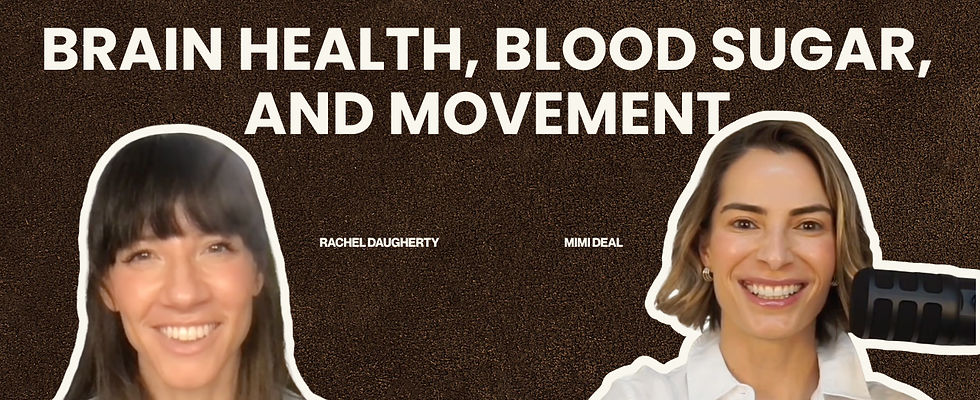
Alzheimer's is something very close to my heart. I watched my grandmother become someone she wouldn't have wanted to be, and it was heartbreaking for our family. So this episode means a lot. Our guest, Rachel Daugherty, is the founder of Booty and Brains and the Brain Matters community, and she brings a rare gift: she takes the complex science of brain health and makes it genuinely understandable, actionable, and even hilarious.
Rachel shares her own story, caring for her mother through Alzheimer's while raising two young kids, and the moment that changed everything: the realization that she would do whatever she could so her children might never face that same grief. That led her deep into brain health and metabolic health, and to a profound shift, from a lifetime of "chasing skinny" and diet culture toward nourishment, strength, and self-compassion.
We get into the real science, made simple: why the brain and body aren't separate systems, how insulin resistance may contribute to brain damage over time, and why fasting insulin is a test worth asking your provider about.
We talk about starting with just breakfast, why what you eat first sets your blood sugar for the day, the surprising power of moving for even five minutes after meals, why breaking up long stretches of sitting matters as much as working out, and how strength training and playful "movement snacks" changed both our lives.
Above all, this is a conversation about approaching your health from love rather than punishment. As Rachel says, your health is bigger than you.
FAQs
How is brain health connected to metabolic health?
More than most people realize. The brain uses a large share of the body's energy, so the systems that regulate energy, like blood sugar and insulin, matter for the brain too. Researchers increasingly believe that insulin resistance affecting the brain's neurons over time may contribute to cognitive decline. It's an evolving area of science, but it means the habits that support your metabolism also support your brain.
What is "type 3 diabetes"?
It's an informal term some researchers use to describe the idea that insulin resistance in the brain may play a role in Alzheimer's, framing it as connected to blood sugar dysregulation. It's a hypothesis and an active area of study, not settled consensus, and Alzheimer's is understood to be multifactorial. But it highlights why blood sugar health is relevant to brain health.
Where should I start if I want to support my brain and metabolic health?
Start small, don't overhaul everything at once. A great first step is breakfast, since what you eat first sets the tone for your blood sugar all day. Building your first meal around protein and fiber, rather than quickly absorbed refined carbs and juice, helps steady your energy and avoid crashes. One sustainable change that you actually keep beats a total overhaul you abandon.
Why does moving after meals matter?
When you move, your muscles pull glucose out of your bloodstream, which eases the work your insulin has to do. Even five to ten minutes of walking after a meal can meaningfully improve your blood sugar response. It's a small, easy habit with an outsized benefit.
Is it true that sitting a lot is harmful even if I exercise?
Yes. You can work out hard for an hour and still sit for the rest of the day, a pattern sometimes called "active sedentary." Research suggests that breaking up long stretches of sitting with small bursts of movement throughout the day supports blood sugar regulation even more than a single longer workout followed by hours of sitting. Short, frequent movement adds up.
Do I need a gym to build muscle?
No. Strength training is genuinely valuable, especially for women, but it doesn't require a gym or a squat rack. A couple of dumbbells at home is enough to start, and it doesn't have to be miserable. The key is finding a version you'll actually keep doing.
Why is morning light recommended?
Getting sunlight in your eyes in the morning helps anchor your circadian rhythm, which influences far more than sleep. A good rule of thumb is that morning light supports better sleep that night. It's free, quick, and an easy, grounding way to start the day.
Get the Handout
Full Transcript
Follow us
TikTok
Youtube
Become a Patient
Medical Providers Join my Clinician Education Platform
Subscribe to our Newsletter
Learn at Pinnacle to earn FREE CE/CME credit for listening to this episode
Rachel Daugherty
Chapters
00:00 Intro
00:06 Introduction and Personal Stories
00:48 Understanding Alzheimer's and Its Impact
03:33 The Shift to Brain Health and Prevention
06:11 The Role of Nutrition in Brain Health
08:46 Making Health Information Accessible
11:47 Practical Steps for Dietary Changes
14:23 Exploring Alzheimer's Mechanisms
17:17 Blood Sugar and Its Connection to Alzheimer's
20:08 Breakfast Choices for Better Health
23:02 Creative Breakfast Ideas
26:17 The Importance of Small Changes in Health
28:53 Finding Joy in Movement
32:24 The Power of Strength Training
35:11 Accessible Movement for Better Health
36:10 Building a Supportive Community
41:04 Practical Tips for Alzheimer's Caregivers
46:05 Outro