
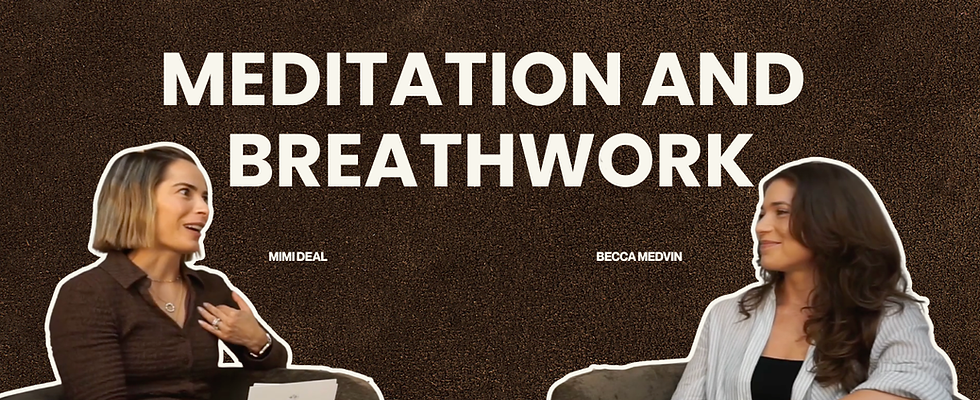
Some of the best connections happen by accident. I met Becca Medvin during a car meditation at a wellness event. I'd climbed into her car to escape the heat and left feeling calmer than I had in ages. So I asked her on the show. Becca is a meditation and yoga teacher rooted in the Himalayan tradition, with a decade of study at the Clairvoyant Center of Hawaii and a passion for breathwork, flower essences, and herbalism. As she puts it, all your answers already exist within you, these practices simply help you see them.
We talk about presence, and why most of us are rarely where we actually are. We get candid, empath to empath, about setting energetic boundaries and how sensitive people so often end up carrying everyone else's emotions. And we get practical: Becca walks through a simple breath-and-movement practice anyone can do, how to tone the vagus nerve using your own voice, and why playfulness and self-compassion aren't distractions from healing but part of it.
As two recovering perfectionists, we land on her favorite reminder of all, just give yourself a break.
A quick note: Becca's tradition includes spiritual and energetic practices, which we share as her perspective and lived experience. This is an educational conversation, not medical advice.
If you've been running from one thing to the next without a full breath, consider this your invitation to pause.
FAQs
Why do I feel so scattered even when I'm not doing much?
Often it's because your mind isn't where your body is, it's in the past, the future, or a conversation that's already over. A great deal of stress comes from this gap. A simple reset is to ask, "where am I right now?" and notice your eyes, your feet, your hands, and your breath. These small anchors bring you back to the present, which is the only place calm can actually take hold.
What's the right way to breathe to feel calmer?
Let your belly expand outward as you inhale, like a balloon, which means the breath is reaching deep and lowering the diaphragm, then let the belly draw back in as you exhale. Many people do the reverse, tensing the belly on the inhale, which keeps the body braced. Once you have the movement right, slow the breath down and breathe through the nose, which is the most calming.
I find it impossible to sit still and meditate. What can I do instead?
Pair your breath with gentle movement, it gives a distracted mind something to hold onto. A simple option: stand with feet hip-width apart, inhale as you lift your heels and arms, exhale as you lower them, starting with a count of five. If your balance is unsteady, hold a chair. Even five rounds can leave you noticeably calmer.
How does using my voice help me relax?
Humming, singing, or making sound creates a vibration that helps tone the vagus nerve, part of the system responsible for your body's rest-and-calm response. It's not about sounding good, singing in the car or shower, or even making a deliberately silly sound, can be genuinely soothing. Freeing your voice without judging how it sounds is part of the benefit.
How much practice do I actually need to see a difference?
Less than you'd think, but done consistently. A brief daily practice will do more for you than an occasional intense one, think of it like a short daily shower rather than one long one a month. Even thirty seconds of conscious breathing each day, kept up over time, can meaningfully shift how you feel.
I'm a perfectionist. How do I even start a calming practice without doing it "wrong"?
By letting go of the idea that there's a "right" way to begin. The only honest starting point is exactly where you are, anxious, tired, or unsettled, and accepting that rather than resisting it. Waiting until conditions feel perfect is itself the obstacle. Meeting yourself with a little compassion is the practice.
Get the Handout
Full Transcript
Follow us
TikTok
Youtube
Medical Providers Join my Clinician Education Platform
Subscribe to our Newsletter
Learn at Pinnacle to earn FREE CE/CME credit for listening to this episode
Becca Medvin
Chapters
00:00 Intro
00:06 Guest Introduction: Becca Medvin
01:33 Becca’s Approach to Meditation, Yoga & Flower Essences
02:07 Clairvoyance and Intuitive Development
04:38 Overcoming Self-Doubt and Sensitivity
06:31 Setting Boundaries as an Empath
09:45 Empowerment Through Self-Awareness
14:47 The Lifelong Journey of Self-Discovery
17:15 Accepting Your Present State
19:23 The Connection Between Yoga and Mindfulness
21:25 Starting Your Yoga Journey: Small Steps Matter
22:09 Integrating Breath with Movement
24:01 The Importance of Breath Awareness
24:29 A Simple Daily Breathing Practice
25:59 Different Styles of Breathwork
27:27 Breathwork for Emotional Release
28:59 Toning the Vagus Nerve Through Voice and Breath
31:06 Rediscovering Playfulness and Joy
32:12 Giving Yourself Permission to Be Free
33:20 Understanding Flower Essences
35:17 Final Thoughts and Takeaways
37:01 Outro